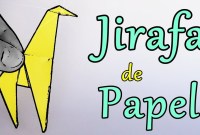
Welcome to the world of origami, where you can transform a simple sheet of paper into intricate and captivating creations. Today, we embark on an exciting journey to fold an easy origami kangaroo, a graceful marsupial known for its distinctive features and hopping locomotion. This step-by-step guide is designed for beginners, so grab a square sheet of paper, and let’s hop into the fun.
Origami, the ancient art of paper folding, originated in China and has since spread worldwide, captivating people with its ability to create beautiful and intricate forms from a single sheet of paper. Origami not only provides a relaxing and enjoyable activity but also offers numerous benefits, including improved hand-eye coordination, spatial reasoning, and problem-solving skills.
Before you start folding, let’s take a brief moment to understand the basic origami terminology used in the instructions. A ‘fold’ refers to the process of creasing the paper along a straight line, while an ‘unfold’ reverses that crease. ‘Mountain folds’ are formed by pushing the paper upwards, creating a peak, and ‘valley folds’ are made by pushing the paper downwards, creating a trough.
easy origami kangaroo
Simple steps for beginners.
- Square paper required.
- Basic folds and creases.
- No complex techniques.
- Suitable for all ages.
- Fun and educational activity.
- Improves hand-eye coordination.
- Enhances spatial reasoning.
Origami kangaroos make great decorations or gifts, and the process of folding them is a relaxing and enjoyable experience. So gather your materials, follow the instructions, and let your creativity hop wild.
Square paper required.
For this easy origami kangaroo, you’ll need a square piece of paper. The size of the paper will determine the size of your finished kangaroo. You can use any color or type of paper you like, but origami paper is ideal because it is thin and easy to fold.
If you don’t have origami paper, you can easily make your own square paper from a regular piece of rectangular paper. Simply follow these steps:
1. Start with a rectangular piece of paper.
2. Fold the paper in half lengthwise.
3. Unfold the paper.
4. Fold the paper in half widthwise.
5. Unfold the paper.
6. You should now have two intersecting crease lines.
7. Fold the paper along the diagonal crease lines, bringing the top right corner to the bottom left corner.
8. Unfold the paper.
9. Fold the paper along the other diagonal crease line, bringing the top left corner to the bottom right corner.
10. Unfold the paper.
You now have a square piece of paper that you can use to fold your origami kangaroo.
Once you have your square piece of paper, you’re ready to start folding your origami kangaroo. Follow the step-by-step instructions provided in the previous section to create your very own origami kangaroo.
Remember, practice makes perfect in origami. Don’t be discouraged if your first attempt doesn’t turn out exactly as you hoped. Keep folding and experimenting, and you’ll soon be creating beautiful and intricate origami creations.
Basic folds and creases.
Origami involves various folds and creases to transform a flat sheet of paper into intricate shapes. In the context of our easy origami kangaroo, we’ll focus on two fundamental folds:
- Valley fold:
This is the most common fold in origami. To make a valley fold, place the paper in front of you with the colored side facing up. Then, fold the paper in half lengthwise, bringing the right edge to meet the left edge. Crease the fold firmly with your fingers or a bone folder.
- Mountain fold:
This fold is the opposite of a valley fold. To make a mountain fold, place the paper in front of you with the colored side facing down. Then, fold the paper in half lengthwise, bringing the right edge to meet the left edge. Crease the fold firmly with your fingers or a bone folder.
- Square fold:
A square fold is simply a combination of a valley fold and a mountain fold. To make a square fold, start with a valley fold. Then, unfold the paper and make a mountain fold along the same crease. This will create a square shape.
- Diagonal fold:
A diagonal fold is a fold that runs diagonally across the paper. To make a diagonal fold, place the paper in front of you as a diamond. Then, fold the paper in half diagonally, bringing the top right corner to the bottom left corner. Crease the fold firmly with your fingers or a bone folder.
These basic folds and creases are the building blocks of origami. By combining and repeating these folds, you can create a wide variety of origami models, including our easy origami kangaroo.
No complex techniques.
One of the great things about this easy origami kangaroo is that it doesn’t require any complex techniques. This makes it a perfect project for beginners, as well as for experienced folders who are looking for a quick and easy origami fix.
- No wet-folding:
Wet-folding is a technique used in origami to create smooth, curved shapes. However, this technique can be tricky to master, and it’s not necessary for our easy origami kangaroo.
- No complex crease patterns:
Some origami models require you to follow complex crease patterns. These patterns can be difficult to understand and execute, especially for beginners. Our easy origami kangaroo, on the other hand, uses simple crease patterns that are easy to follow.
- No advanced folding sequences:
Some origami models involve long and complex folding sequences. These sequences can be difficult to remember and execute, especially for beginners. Our easy origami kangaroo, on the other hand, uses a simple folding sequence that is easy to follow.
- No special tools or materials:
To make our easy origami kangaroo, you only need a square piece of paper. You don’t need any special tools or materials, such as bone folders or tweezers.
So if you’re looking for an easy and enjoyable origami project, our easy origami kangaroo is the perfect choice. It’s simple enough for beginners, yet challenging enough to keep experienced folders entertained.
Suitable for all ages.
Origami is an activity that can be enjoyed by people of all ages. Our easy origami kangaroo is particularly well-suited for beginners, including children. Here are a few reasons why:
Simple folds: The folds used to make our easy origami kangaroo are all basic folds, such as valley folds and mountain folds. These folds are easy to learn and execute, even for young children.
Easy-to-follow instructions: The instructions for our easy origami kangaroo are clear and concise, with step-by-step photos to guide you through the process. This makes it easy for children to follow along and create their own origami kangaroo.
No special tools or materials: To make our easy origami kangaroo, you only need a square piece of paper. You don’t need any special tools or materials, such as bone folders or tweezers. This makes it an accessible activity for children and adults alike.
Fun and educational: Origami is a fun and educational activity that can help children develop their fine motor skills, spatial reasoning, and problem-solving skills. It can also help children learn about different cultures and traditions.
Great for all occasions: Origami kangaroos can be made for a variety of occasions, such as birthdays, parties, or just for fun. They can also be used as decorations or gifts.
So if you’re looking for an activity that is fun, educational, and suitable for people of all ages, our easy origami kangaroo is the perfect choice.
Fun and educational activity.
Origami is a fun and educational activity that can be enjoyed by people of all ages. Our easy origami kangaroo is a great example of how origami can be both fun and educational.
- Develops fine motor skills: Origami requires the use of fine motor skills, such as folding and creasing paper. These skills are important for everyday tasks, such as writing, typing, and buttoning clothes. Origami can help children develop these skills in a fun and engaging way.
- Enhances spatial reasoning: Origami involves understanding and manipulating three-dimensional shapes. This helps children develop their spatial reasoning skills, which are important for math, science, and engineering. Origami can help children learn about geometry and spatial relationships in a fun and interactive way.
- Promotes problem-solving skills: Origami often requires children to think critically and solve problems. For example, they may need to figure out how to make a particular fold or how to assemble the different parts of the model. Origami can help children develop their problem-solving skills in a fun and challenging way.
- Teaches patience and perseverance: Origami can be a challenging activity, but it is also very rewarding. When children successfully complete an origami model, they feel a sense of accomplishment and pride. Origami can help children learn the importance of patience and perseverance.
In addition to these benefits, origami can also help children learn about different cultures and traditions. For example, our easy origami kangaroo can teach children about the culture and wildlife of Australia.
Improves hand-eye coordination.
Hand-eye coordination is the ability to coordinate the movement of the eyes with the movement of the hands. It is an important skill for everyday tasks, such as writing, typing, and playing sports. Origami can help improve hand-eye coordination in children and adults.
- Requires precise folding: Origami involves making precise folds and creases. This requires children to use their hands and eyes together to carefully position the paper and make the folds. Origami can help children develop their hand-eye coordination in a fun and engaging way.
- Develops fine motor skills: Origami also requires the use of fine motor skills, such as folding and creasing paper. These skills are important for everyday tasks, such as writing, typing, and buttoning clothes. Origami can help children develop their fine motor skills and hand-eye coordination at the same time.
- Enhances spatial reasoning: Origami involves understanding and manipulating three-dimensional shapes. This helps children develop their spatial reasoning skills, which are important for math, science, and engineering. Origami can help children learn about geometry and spatial relationships in a fun and interactive way, which can also improve their hand-eye coordination.
- Provides a sense of accomplishment: When children successfully complete an origami model, they feel a sense of accomplishment and pride. This can motivate them to continue practicing origami, which can further improve their hand-eye coordination.
Overall, origami is a great way to improve hand-eye coordination in children and adults. It is a fun and engaging activity that can also help develop other important skills, such as fine motor skills, spatial reasoning, and problem-solving skills.
Enhances spatial reasoning.
Spatial reasoning is the ability to understand and manipulate three-dimensional shapes. It is an important skill for math, science, and engineering. It is also important for everyday tasks, such as navigating through a building or packing a suitcase.
Origami can help enhance spatial reasoning in children and adults. When you fold an origami model, you need to understand how the different parts of the paper will fit together to create the final shape. You also need to be able to visualize the final shape in three dimensions.
The following are some specific ways that origami can enhance spatial reasoning:
- Develops mental imagery skills: When you fold an origami model, you need to be able to visualize the final shape in your mind. This helps you to understand how the different parts of the paper will fit together.
- Improves understanding of geometry: Origami models are often based on geometric shapes, such as squares, triangles, and cubes. By folding these models, children can learn about the properties of these shapes and how they can be combined to create more complex structures.
- Enhances problem-solving skills: Some origami models can be challenging to fold. Children need to use their problem-solving skills to figure out how to make the different folds and how to assemble the different parts of the model. This can help them develop their problem-solving skills in general.
- Provides a sense of accomplishment: When children successfully complete an origami model, they feel a sense of accomplishment and pride. This can motivate them to continue practicing origami, which can further enhance their spatial reasoning skills.
Overall, origami is a great way to enhance spatial reasoning in children and adults. It is a fun and engaging activity that can also help develop other important skills, such as fine motor skills, hand-eye coordination, and problem-solving skills.
FAQ
Introduction Paragraph for FAQ: If you have any questions about our easy origami, feel free to check out our frequently asked questions (FAQs) below. If you can’t find the answer to your question here, please don’t hesitate to contact us.
Question 1: What kind of paper should I use for this easy origami?
Answer 1: You can use any type of paper you like, but we recommend using square paper that is thin and easy to fold. You can use regular paper,origami paper, or even recycled paper.
Question 2: What size paper do I need?
Answer 2: The size of paper you need depends on how big you want your kangaroo to be. For a small kangaroo, you can use a 6-inch square piece of paper. For a larger kangaroo, you can use an 8-inch or 10-inch square piece of paper.
Question 3: How long will it take to make this easy kangaroo?
Answer 3: The time it takes to make this easy kangaroo will vary depending on your skill level. If you’re a beginner, it may take you around 30 minutes to make your kangaroo. If you’re more experienced, you may be able to make it in 15 minutes or less.
Question 4: Can I make this easy kangaroo with my kids?
Answer 4: Yes, this easy kangaroo is perfect for kids. The instructions are simple to follow, and the folds are easy to make. Your kids will have a great time making their own kangaroos.
Question 5: What other animals can I make with this easy kangaroo?
Answer 5: Once you’ve mastered the basic folds for this easy kangaroo, you can use the same technique to make other animals, such as rabbits, dogs, and elephants. You can also get creative and make your own unique animals.
Question 6: Where can I find more easy origami patterns?
Answer 6: There are many resources available online and in books where you can find more easy origami patterns. You can also check out our website for a variety of free origami patterns, including animals, plants, and objects.
Conclusion Paragraph for FAQ: We hope this FAQ has answered your questions about our easy origami kangaroo. If you have any other questions, please don’t hesitate to contact us. Happy folding!
Tips
Introduction Paragraph for Tips: Here are a few tips to help you make the most of your origami experience:
Tip 1: Start with simple folds. If you’re new to origami, start with simple folds and gradually work your way up to more complex ones. This will help you build your skills and confidence.
Tip 2: Use high-quality paper. The quality of the paper you use will affect the look and feel of your origami models. Choose paper that is thin and easy to fold, but strong enough to hold its shape.
Tip 3: Be patient. Origami can be a challenging hobby, but it’s also very rewarding. Don’t get discouraged if you don’t get it right the first time. Just keep practicing and you’ll eventually be able to create beautiful and intricate origami models.
Tip 4: Have fun! Origami is a great way to relax and de-stress. So put on some music, grab a cup of tea, and enjoy the process of creating something beautiful with your own hands.
Closing Paragraph for Tips: With a little practice, you’ll be able to create amazing origami models that will impress your friends and family. So what are you waiting for? Start folding today!
Transition paragraph: Now that you have some tips for making origami, it’s time to learn how to make an easy origami kangaroo.
Conclusion
Summary of Main Points: Origami is a fun and rewarding hobby that can be enjoyed by people of all ages. It’s a great way to relax, de-stress, and improve your hand-eye coordination, spatial reasoning, and problem-solving skills. Origami can also be used to teach children about different cultures and traditions.
In this article, we’ve provided you with everything you need to know to get started with origami, including a step-by-step guide for making an easy origami kangaroo. We’ve also included some tips to help you make the most of your origami experience.
Closing Message: So what are you waiting for? Grab a piece of paper and start folding! With a little practice, you’ll be able to create amazing origami models that will impress your friends and family. Happy folding!