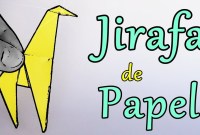
Welcome to the fascinating world of papel origami, where paper transforms into intricate and captivating creations with just a few simple folds. This informatical article is a friendly introduction to the art of papel origami, guiding you through the basics and inspiring you to explore this captivating hobby.
Origami, meaning “paper folding” in Japanese, is an ancient art form that has been passed down through generations. It involves folding a single piece of paper into a variety of shapes, ranging from simple geometric patterns to complex representations of animals, flowers, and everyday objects. Origami is not only a fun and creative activity but also a mental exercise that promotes spatial reasoning, problem-solving, and fine motor skills.
As you embark on your origami journey, you will discover the beauty and diversity of this art form. Let’s dive into the fundamental techniques, essential tools, and captivating origami projects to help you create your own masterpieces.
papel kami origami
Discover the captivating art of papel kami origami with these 10 key points:
- Ancient Japanese art
- Folding paper into shapes
- Single square sheet
- No cutting or gluing
- Develops spatial reasoning
- Improves problem-solving skills
- Enhances fine motor skills
- Relaxing and meditative
- Wide range of projects
- Suitable for all ages
Embark on your origami journey and let your creativity unfold as you transform a simple piece of paper into a world of endless possibilities.
Ancient Japanese art
The art of papel kami origami has its roots deep in ancient Japanese culture. Legends trace its origins back to the 6th century, during the Heian period. It is believed that origami was initially used in religious ceremonies and rituals, where intricate paper folds represented offerings to the gods. Over time, origami evolved into a popular pastime and art form, practiced by people of all ages and backgrounds.
In the 17th century, origami experienced a resurgence in popularity, thanks to the publication of several books on the subject. These books introduced new folding techniques and complex designs, inspiring a wave of creativity and innovation among origami enthusiasts. Origami masters began to create elaborate models, showcasing their skills and pushing the boundaries of the art form.
During the Edo period (1603-1868), origami became a symbol of Japanese culture and was often used in traditional festivals and celebrations. People would fold paper cranes, symbolizing good luck and longevity, and display them in their homes or gift them to loved ones. Origami also found its way into Japanese literature and art, where it was depicted in paintings, woodblock prints, and other forms of artistic expression.
In the modern era, origami has gained worldwide recognition and popularity. Origami conventions and exhibitions are held around the world, showcasing the latest creations and innovations in the field. Origami artists continue to explore new possibilities, using different types of paper, unconventional folding techniques, and even incorporating technology into their designs. Despite its ancient origins, origami remains a vibrant and evolving art form, captivating people of all ages and cultures.
The rich history of papel kami origami is a testament to its enduring appeal and cultural significance. From its humble beginnings in religious ceremonies to its transformation into a beloved art form, origami has stood the test of time, inspiring creativity and spreading joy across the globe.
Folding paper into shapes
The essence of papel kami origami lies in the art of folding paper into intricate and captivating shapes. Origami artists start with a single square sheet of paper, typically made from thin and pliable materials like rice paper, vellum, or origami paper. The paper is then folded and manipulated according to a specific sequence of steps, creating a three-dimensional object.
Origami folds can be classified into two main types: basic folds and complex folds. Basic folds are the fundamental building blocks of origami, such as the square fold, triangle fold, and bird base. These folds are used to create simple geometric shapes, which can then be combined to form more complex structures.
Complex folds, on the other hand, are more intricate and challenging to master. They often involve multiple steps and combinations of basic folds, resulting in elaborate and lifelike models. Some popular complex folds include the squash fold, the petal fold, and the sink fold. Origami artists use these complex folds to create intricate designs, such as animals, flowers, insects, and even human figures.
The beauty of origami lies in its ability to transform a flat piece of paper into a three-dimensional object with remarkable detail and precision. Origami artists rely on their spatial reasoning skills and mathematical knowledge to visualize the final shape and determine the necessary folds. The process of folding paper into shapes is not only a creative endeavor but also a mental exercise that promotes problem-solving and critical thinking.
As you delve into the world of papel kami origami, you will discover the endless possibilities of folding paper into shapes. With patience, practice, and a touch of creativity, you too can create stunning origami masterpieces that will amaze and inspire.
Single square sheet
One of the defining characteristics of papel kami origami is the use of a single square sheet of paper. This constraint not only adds to the challenge but also contributes to the beauty and elegance of origami creations.
By starting with a single square, origami artists are forced to work within certain limitations. They must carefully plan their folds and utilize the paper’s entire surface area to create the desired shape. This process encourages creativity and resourcefulness, as artists explore different ways to manipulate the paper and achieve their artistic vision.
The single square sheet also emphasizes the interconnectedness of the origami model. Every fold, crease, and tuck is interdependent, affecting the overall structure and appearance of the final creation. This interconnectedness creates a sense of unity and harmony, where each element contributes to the beauty of the whole.
Furthermore, the use of a single square sheet highlights the transformative nature of origami. A simple piece of paper, through the art of folding, can be transformed into a myriad of intricate and captivating shapes. This transformation process is a metaphor for the potential that lies within us all, the ability to unfold our own creativity and potential and create something truly remarkable.
Embracing the constraint of a single square sheet is what makes papel kami origami so unique and captivating. It challenges artists to think creatively, utilize their skills, and produce stunning works of art that showcase the beauty and versatility of paper.
No cutting or gluing
Papel kami origamis distinctive feature is its adherence to the principle of “no cutting or gluing.” This means that all creations are made from a single square sheet of paper without the use of scissors or adhesive.
- Purity of form:
The absence of cutting and gluing ensures that the final creation retains its original form. There is no need to alter or add to the paper, preserving its integrity and purity.
- Challenge and creativity:
The restriction of cutting and gluing encourages creativity and problem-solving. Artists must rely on their skill and imagination to create the desired shapes and structures solely through folding and manipulation.
- Respect for paper:
Origami artists show respect for the material they work with by avoiding unnecessary alterations. Paper is seen as a precious resource, and each fold is a thoughtful manipulation that honors its inherent qualities.
- Universality and accessibility:
The “no cutting or gluing” rule makes origamis universally accessible. As long as you have a square sheet of paper, you can create stunning creations without the need for additional tools or materials.
The adherence to “no cutting or gluing” is what sets papel kami origamis apart from other papercraft forms. It emphasizes the art of folding and manipulation, promoting creativity, problem-solving, and a deep appreciation for the beauty and versatility of paper.
Develops spatial reasoning
Papel kami origami is an excellent way to develop spatial reasoning skills, which involve the ability to visualize and manipulate objects in three dimensions. As you fold and manipulate the paper, you must constantly think about how the different folds will affect the final shape and structure of the origami creation.
Origami challenges you to visualize the end result and plan the necessary steps to achieve it. This process requires you to mentally rotate and transform the paper in your mind, considering the different angles and perspectives. With practice, you will develop a stronger sense of spatial awareness and the ability to visualize complex three-dimensional objects.
The intricate folds and patterns in origami also help to improve your hand-eye coordination and fine motor skills. As you carefully fold and crease the paper, you must pay close attention to the precision and accuracy of your movements. This practice enhances your dexterity and control, making it easier to perform other tasks that require fine motor skills.
Furthermore, origami encourages problem-solving and critical thinking skills. When you encounter a challenging fold or pattern, you must analyze the situation and come up with creative solutions to overcome the obstacle. This process of trial and error helps to develop your problem-solving abilities and teaches you to think outside the box.
By engaging in papel kami origami, you can enhance your spatial reasoning, hand-eye coordination, fine motor skills, and problem-solving abilities. These cognitive skills are essential for success in various fields, including mathematics, engineering, architecture, and art.
Improves problem-solving skills
Papel kami origami is a fantastic activity for improving problem-solving skills. As you work on different origami projects, you will inevitably encounter challenges and obstacles that require you to think creatively and come up with innovative solutions.
When faced with a complex fold or pattern, you must analyze the situation, identify the problem, and develop a step-by-step plan to achieve the desired result. This process of trial and error teaches you to break down complex problems into smaller, more manageable steps, making them easier to solve.
Origami also encourages you to think outside the box and consider different perspectives. There is often more than one way to fold a particular shape or pattern. By experimenting with different approaches, you learn to be flexible and adaptable in your thinking, which is a valuable skill for problem-solving in general.
Furthermore, origami helps to improve your attention to detail and your ability to follow instructions. When working on an origami project, you must pay close attention to the sequence of folds and creases, and you must be precise in your movements. This practice enhances your focus and concentration, which can be beneficial in other areas of life where attention to detail is important.
By engaging in papel kami origami, you can develop valuable problem-solving skills that are applicable to a wide range of situations. These skills can help you to think more creatively, analyze problems more effectively, and come up with innovative solutions.
Enhances fine motor skills
Papel kami origami is an excellent way to improve fine motor skills, which involve the small muscles in your hands, wrists, and fingers. As you fold, crease, and manipulate the paper, you are strengthening these muscles and developing greater control over your movements.
The intricate folds and patterns in origami require precision and accuracy. You must be able to make small, controlled movements in order to achieve the desired results. This practice helps to improve your hand-eye coordination and dexterity.
Origami also encourages you to use both hands in a coordinated manner. Many origami folds require you to use both hands simultaneously, which helps to develop bilateral coordination and ambidexterity.
Furthermore, origami can help to improve your patience and focus. When working on a complex origami project, you must take your time and pay close attention to the details. This practice can help to improve your overall concentration and attention span.
By engaging in papel kami origami, you can enhance your fine motor skills, hand-eye coordination, bilateral coordination, and focus. These skills are essential for many everyday activities, such as writing, typing, playing musical instruments, and participating in sports.
Relaxing and meditative
Papel kami origami is not only a creative and challenging activity but also a relaxing and meditative one. The repetitive folding and creasing motions can have a calming effect on the mind, helping to reduce stress and anxiety.
When you focus on the task at hand and let go of other pensieri, you enter a state of mindfulness. This state is characterized by a heightened awareness of the present moment and a sense of inner peace and tranquility.
Origami can also be a form of meditation in motion. As you fold and manipulate the paper, you can focus on the sensations in your hands and the movements of your body. This practice can help to connect you with your breath and promote a sense of relaxation and well-being.
Furthermore, the beauty and intricacy of origami creations can be a source of inspiration and joy. When you see the finished product of your work, you can feel a sense of accomplishment and pride. This positive experience can boost your mood and leave you feeling refreshed and energized.
By engaging in papel kami origami, you can experience the benefits of relaxation, mindfulness, and meditation. This can lead to a reduction in stress and anxiety, improved mood, and a greater sense of inner peace and well-being.
Wide range of projects
One of the most exciting aspects of papel kami origami is the wide range of projects available. From simple beginner-friendly models to complex and challenging creations, there is something for everyone to enjoy.
- Traditional models:
Origami enthusiasts can explore a vast collection of traditional origami models, such as the crane, the frog, and the samurai helmet. These models have been passed down through generations and are a testament to the enduring beauty and appeal of origami.
- Animals and creatures:
Origami artists have created countless models of animals and creatures, from majestic elephants and soaring eagles to tiny insects and playful dolphins. These models capture the essence and movement of the natural world in a truly captivating way.
- Flowers and plants:
Origami flowers and plants are a popular choice for their delicate beauty and versatility. From simple blossoms to elaborate bouquets, origami flowers can add a touch of elegance to any room or occasion.
- Geometric shapes and patterns:
Origami also offers a wide range of geometric shapes and patterns. These models showcase the mathematical precision and symmetry that can be achieved through paper folding. Geometric origami is a fascinating and challenging領域 for those interested in exploring the intersection of art and mathematics.
With such a diverse range of projects to choose from, papel kami origami offers endless opportunities for creativity, exploration, and personal expression. Whether you are a beginner or an experienced folder, you are sure to find projects that challenge and inspire you.
Suitable for all ages
Papel kami origami is a versatile activity that can be enjoyed by people of all ages, from young children to seniors. It is a great way to bring families and communities together and promote intergenerational bonding.
- Educational value:
Origami has numerous educational benefits for children. It helps to develop spatial reasoning, problem-solving skills, fine motor skills, and creativity. Origami can also be used to teach children about geometry, mathematics, and engineering concepts.
- Therapeutic benefits:
Origami can be a therapeutic activity for people of all ages. The repetitive folding and creasing motions can have a calming effect on the mind and help to reduce stress and anxiety. Origami can also be used as a form of occupational therapy to improve fine motor skills and hand-eye coordination.
- Social benefits:
Origami is a great way to connect with others and build community. People of all ages can come together to share their love of origami, learn from each other, and collaborate on new projects. Origami workshops, conventions, and exhibitions are popular gathering places for origami enthusiasts.
- Lifelong hobby:
Origami is a hobby that can be enjoyed throughout a person’s lifetime. As you gain experience and skill, you canに挑戦 more complex and challenging projects. Origami is a great way to keep your mind sharp and active as you age.
Whether you are a child looking for a fun and educational activity, an adult seeking a relaxing and creative outlet, or a senior looking to stay mentally and socially engaged, papel kami origami has something to offer everyone.
FAQ
Have some questions about the fascinating world of cool origami? Here are some frequently asked questions and answers to help you get started:
Question 1: What is cool origami?
Answer: Cool origami is a term used to describe origami creations that are visually striking, innovative, or challenging to fold. These models often push the boundaries of traditional origami and incorporate unique design elements, complex folding techniques, or unconventional materials.
Question 2: What are some popular styles of cool origami?
Answer: Some popular styles of cool origami include geometric origami, modular origami, wet-folding origami, and kirigami. Geometric origami focuses on creating intricate polyhedra and other three-dimensional shapes. Modular origami involves assembling multiple folded units into larger structures. Wet-folding origami uses dampened paper to achieve smooth curves and organic forms. Kirigami combines folding with cutting to create intricate designs.
Question 3: Who are some famous cool origami artists?
Answer: Some notable cool origami artists include Eric Joisel, Robert Lang, Jun Maekawa, and Sipho Mabona. These artists are known for their groundbreaking designs, innovative techniques, and contributions to the field of origami.
Question 4: Where can I learn cool origami?
Answer: There are many resources available to learn cool origami. You can find books, online tutorials, and classes taught by experienced origami artists. Some popular platforms for learning origami include YouTube, OrigamiUSA, and the British Origami Society.
Question 5: What are some tips for creating cool origami?
Answer: To create cool origami, start with simple models to build your skills and confidence. Gradually progress to more complex models as you become more comfortable with the basics. Experiment with different folding techniques, materials, and design ideas. Don’t be afraid to make mistakes and learn from them. With practice and dedication, you can create stunning origami creations that amaze and inspire.
Question 6: Where can I find inspiration for cool origami?
Answer: There are many sources of inspiration for cool origami. Look at nature, architecture, art, and geometry for ideas. Attend origami exhibitions and conventions to see the latest trends and innovations in the field. Connect with other origami artists online and in person to share ideas and learn from each other.
Remember, cool origami is all about expressing your creativity and pushing the boundaries of what is possible with paper. So dive in, experiment, and let your imagination soar!
Now that you have a better understanding of cool origami, let’s explore some tips and techniques to help you create your own amazing origami creations.
Tips
Ready to take your origami skills to the next level and create truly cool origami? Here are four practical tips to help you achieve amazing results:
Tip 1: Start with good paper.
The quality of your paper can greatly affect the outcome of your origami creations. Choose paper that is thin, strong, and easy to fold. Some popular types of origami paper include Japanese tissue paper (washi), mulberry paper, and Tant origami paper. Experiment with different papers to find one that suits your folding style and the desired look of your models.
Tip 2: Master the basics.
Before you tackle complex cool origami models, it’s essential to have a solid foundation in the basics. Learn the fundamental folds, such as the square fold, triangle fold, and bird base. Practice these folds until they become second nature. Once you have mastered the basics, you can start combining them to create more intricate and interesting designs.
Tip 3: Experiment with different techniques.
There are many different origami techniques that can be used to create cool origami models. Some popular techniques include wet-folding, modular origami, and kirigami. Wet-folding involves dampening the paper to achieve smooth curves and organic forms. Modular origami involves assembling multiple folded units into larger structures. Kirigami combines folding with cutting to create intricate designs. Experiment with different techniques to expand your skills and create unique and captivating origami pieces.
Tip 4: Be patient and persistent.
Creating cool origami models can be challenging, especially when you’re first starting out. Don’t get discouraged if you make mistakes or if your models don’t turn out perfectly at first. Keep practicing and learning from your mistakes. With patience and persistence, you will eventually be able to create stunning origami creations that you can be proud of.
Remember, cool origami is all about pushing the boundaries of creativity and innovation. So don’t be afraid to experiment, take risks, and let your imagination soar. With dedication and practice, you can create truly amazing origami pieces that will impress and inspire others.
Now that you have some practical tips and techniques under your belt, it’s time to explore some of the amazing origami projects that await you. Let’s dive into the world of cool origami and see what you can create!
Conclusion
As we reach the end of our journey into the world of cool origami, let’s reflect on the main points we’ve covered:
Cool origami is a captivating and innovative form of paper folding that pushes the boundaries of traditional origami. It encompasses a wide range of styles, techniques, and materials, allowing artists to create visually striking and challenging origami creations.
To create cool origami, it’s important to start with good paper, master the basics, experiment with different techniques, and be patient and persistent. With dedication and practice, you can create stunning origami pieces that amaze and inspire.
Cool origami is not just a hobby; it’s an art form that combines creativity, precision, and problem-solving skills. It’s a wonderful way to express yourself, challenge your mind, and connect with others who share your passion for origami.
Whether you’re a beginner or an experienced folder, I encourage you to continue exploring the world of cool origami. There are endless possibilities waiting to be discovered, and the only limit is your imagination.
Remember, the beauty of cool origami lies in its ability to transform a simple piece of paper into something truly extraordinary. So embrace the challenge, let your creativity flow, and create amazing origami pieces that will leave everyone in awe.