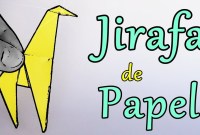
Welcome to the world of origami, where the art of paper folding unveils a vast collection of stunning creations. Among these, the origami giraffe stands tall as an elegant and sophisticated subject that will delight both origami enthusiasts and casual folders alike. In this comprehensive guide, we will embark on a step-by-step journey to craft our own origami giraffe, transforming a simple square piece of paper into a graceful representation of the African beauty.
Origami, with its roots in ancient Japanese culture, has become a global phenomenon, captivating individuals with its ability to breathe life into inanimate objects through the skillful manipulation of paper. The origami giraffe, with its long neck and slender legs, exemplifies the artistry of this ancient craft. So, gather your favorite origami paper, find a peaceful corner, and prepare to embark on a creative expedition.
As we embark on this origami adventure, let’s take a moment to review the necessary materials. You will need a square piece of paper, preferably one with a solid color on one side and a pattern or design on the other. This will add a touch of elegance and contrast to your giraffe. Additionally, ensure you have a pair of scissors or a paper cutter to trim the paper to the desired dimensions.
origami giraffe instructions
Unfold the magic of origami with these 9 essential steps:
- Prepare square paper
- Make preliminary folds
- Create the giraffe’s body
- Form the giraffe’s neck
- Shape the giraffe’s head
- Add details like ears and horns
- Fold the giraffe’s legs
- Refine the giraffe’s features
- Admire your origami giraffe
With patience and attention to detail, you’ll bring to life a captivating origami giraffe that will grace your space with its elegance.
Prepare square paper
To embark on our origami giraffe journey, we begin by preparing the square paper that will transform into this majestic creature. Select a sheet of origami paper that captivates your imagination. You can choose a solid color for a classic look or opt for a patterned paper to add a touch of playful elegance to your giraffe.
Once you have chosen your paper, carefully cut it into a perfect square. Precision is key here, as the square shape serves as the foundation for the entire origami giraffe. If you don’t have a square piece of paper, you can easily make one from a rectangular sheet. Simply fold the paper in half lengthwise, then unfold it and fold it in half widthwise. Cut along the crease to create a perfect square.
With your square paper ready, place it flat on a clean surface. Ensure that the colored or patterned side is facing up, as this will be the visible side of your origami giraffe. Take a moment to admire the blank canvas before you, knowing that soon it will be transformed into a graceful representation of the African beauty.
As you prepare the square paper, remember that the quality of your paper will impact the final outcome of your origami giraffe. Choose paper that is sturdy enough to hold its shape yet flexible enough to allow for intricate folding. Experiment with different types of origami paper to discover the one that best suits your folding style and the desired look for your giraffe.
With the square paper prepared, we are ready to embark on the exciting journey of folding our origami giraffe. The next step will guide us through the preliminary folds that lay the foundation for the giraffe’s body and neck.
Make preliminary folds
With our square paper prepared, we now embark on the preliminary folds that will shape the foundation of our origami giraffe. These folds create the basic structure for the giraffe’s body and neck, setting the stage for the intricate details to come.
- Bird Base Fold:
Begin by folding the square paper in half diagonally in both directions, creating two crease lines that intersect in the center. Unfold the paper, then fold it in half horizontally and vertically, creating two more crease lines. These folds form the bird base, which serves as the starting point for many origami models, including our giraffe.
- Open Squash Fold:
Next, perform an open squash fold on the bird base. To do this, fold the top and bottom edges of the paper towards the center crease, leaving a small gap in the middle. Unfold the paper, then repeat the fold on the left and right edges, again leaving a small gap in the middle. These folds create the basic shape for the giraffe’s body.
- Inside Reverse Fold:
Now, we will make an inside reverse fold to create the giraffe’s neck. Fold the top layer of the paper down along the horizontal crease, then fold it back up along the diagonal crease. Repeat this fold on the other side. These folds form the elongated neck of the giraffe.
- Unfold and Flatten:
Finally, unfold all the folds we have made so far and flatten the paper. This prepares us for the next step, where we will begin shaping the giraffe’s body and neck in more detail.
With the preliminary folds complete, the foundation for our origami giraffe is now in place. In the next step, we will delve into the details, shaping the giraffe’s body, neck, and head with precision and care.
Create the giraffe’s body
With the preliminary folds in place, we now turn our attention to shaping the giraffe’s body. This involves a series of intricate folds that gradually transform the flat paper into a three-dimensional representation of the giraffe’s elegant form.
Begin by folding the left and right edges of the paper towards the center crease. Align the edges carefully to create a sharp fold. Unfold the paper, then repeat the fold on the top and bottom edges, again aligning the edges precisely. These folds create the basic shape for the giraffe’s body.
Next, we will make a series of squash folds to further refine the body shape. Fold the top and bottom edges of the paper towards the center crease, creating two triangular flaps. Unfold the flaps, then fold them in the opposite direction, creating two diamond-shaped flaps. Repeat this process on the left and right edges of the paper.
Now, we will shape the giraffe’s legs. Fold the bottom corners of the paper upwards, creating two triangular legs. Fold the tips of the legs inward to create hooves. Repeat this process on the other side to create the giraffe’s hind legs.
Finally, we will add some细节细节o the giraffe’s body. Fold the top corners of the paper downwards to create the giraffe’s shoulders. You can also add some creases to the body to create a more realistic texture.
With the giraffe’s body complete, we can now move on to shaping the neck and head, bringing our origami giraffe to life.
Form the giraffe’s neck
With the giraffe’s body taking shape, we now turn our attention to crafting its long and graceful neck. This step requires careful folding and attention to detail to capture the elegant proportions of the giraffe.
Begin by folding the top layer of the paper downwards along the horizontal crease. Unfold the paper, then fold the top corners of the paper inwards, creating two triangular flaps. Fold these flaps downwards along the diagonal creases to form the giraffe’s neck.
To add more definition to the neck, we will make a series of squash folds. Fold the left and right edges of the neck inwards, creating two triangular flaps. Unfold the flaps, then fold them in the opposite direction, creating two diamond-shaped flaps. Repeat this process on the front and back of the neck.
Now, we will shape the giraffe’s head. Fold the top layer of the paper downwards along the horizontal crease. Unfold the paper, then fold the top corners of the paper inwards, creating two triangular flaps. Fold these flaps downwards along the diagonal creases to form the giraffe’s head.
Finally, we will add some细节细节o the giraffe’s neck and head. Fold the bottom corners of the neck inwards to create the giraffe’s chin. You can also add some creases to the neck and head to create a more realistic texture.
With the giraffe’s neck and head complete, our origami giraffe is almost taking shape. In the next step, we will add the finishing touches, including the giraffe’s ears, horns, and tail, to bring it to life.
Shape the giraffe’s head
Now that the giraffe’s neck is complete, we can focus on shaping its distinctive head. This step involves a combination of careful folds and shaping to capture the giraffe’s elegant features.
- Fold the Head:
Begin by folding the top layer of the paper downwards along the horizontal crease. Unfold the paper, then fold the top corners of the paper inwards, creating two triangular flaps. Fold these flaps downwards along the diagonal creases to form the giraffe’s head.
- Create the Ears:
To make the giraffe’s ears, fold the top corners of the head inwards. Then, fold the tips of the ears outwards to create a three-dimensional shape.
- Shape the Muzzle:
Fold the bottom corners of the head inwards to form the giraffe’s muzzle. You can also add some creases to the muzzle to create a more realistic texture.
- Add Details:
To complete the giraffe’s head, you can add some final details. For example, you can use a marker or pen to draw the giraffe’s eyes and nostrils. You can also add some creases to the head to create a more realistic texture.
With the giraffe’s head complete, our origami giraffe is almost brought to life. In the next step, we will add the finishing touches, including the giraffe’s horns and tail, to complete its majestic appearance.
Add details like ears and horns
With the giraffe’s basic shape complete, we can now add the finishing touches that bring it to life. These details, such as the ears and horns, add character and personality to our origami giraffe.
- Create the Ears:
To make the giraffe’s ears, fold the top corners of the head inwards. Then, fold the tips of the ears outwards to create a three-dimensional shape. You can also add some creases to the ears to create a more realistic texture.
- Shape the Horns:
To make the giraffe’s horns, fold two small triangles from the top of the head. Then, fold the tips of the triangles inwards to create the horns. You can also add some creases to the horns to create a more realistic texture.
- Add Eyes and Nostrils:
To complete the giraffe’s face, you can use a marker or pen to draw its eyes and nostrils. You can also add some creases to the face to create a more realistic texture.
- Add Spots or Patterns:
If you want to add some extra personality to your giraffe, you can use colored markers or pens to add spots or patterns to its body. This will make your giraffe unique and eye-catching.
With the details added, our origami giraffe is now complete. Take a step back and admire your creation. You have successfully brought a majestic creature to life using nothing but a piece of paper and your own two hands.
Fold the giraffe’s legs
To complete our origami giraffe, we need to add its legs. This step involves careful folding and shaping to create the giraffe’s long and slender legs.
Begin by folding the bottom corners of the body inwards. Make sure to align the edges precisely to create clean and sharp folds. These folds will form the giraffe’s front legs.
Next, fold the bottom corners of the body outwards to create the giraffe’s hind legs. Again, make sure to align the edges precisely to create clean and sharp folds.
To shape the legs, fold the top corners of the front legs inwards and the bottom corners of the hind legs inwards. This will create a more three-dimensional and realistic look for the legs.
Finally, you can add some details to the legs to make them more realistic. For example, you can use a marker or pen to draw hooves on the bottom of the legs. You can also add some creases to the legs to create a more textured look.
With the legs complete, our origami giraffe is almost finished. In the next step, we will add the final details, such as the giraffe’s ears and horns, to bring it to life.
Refine the giraffe’s features
With the basic shape of our origami giraffe complete, it’s time to add some details and refine its features to bring it to life.
Start by shaping the giraffe’s head. Gently fold the top corners of the head inwards to create a more defined shape. You can also add some creases to the head to create a more realistic texture.
Next, focus on the giraffe’s eyes. Use a marker or pen to draw two small circles for the eyes. You can also add some eyelashes and eyebrows to give the giraffe a more expressive look.
Don’t forget about the giraffe’s mouth. Draw a small, curved line for the mouth and add a few details, such as a tongue or teeth, to make it more realistic.
Finally, you can add some finishing touches to the giraffe’s body. For example, you can use a marker or pen to draw spots or stripes on the giraffe’s body. You can also add some creases to the body to create a more textured look.
With all the details in place, your origami giraffe is complete. Take a step back and admire your creation. You’ve successfully transformed a simple square of paper into a majestic giraffe.
Admire your origami giraffe
With the final details added, it’s time to take a step back and admire your origami giraffe. This majestic creature, crafted from a single square of paper, is a testament to your skill and patience.
- Appreciate the Beauty:
Take a moment to appreciate the beauty of your origami giraffe. Notice the intricate details, the graceful curves, and the lifelike proportions. Each fold and crease has contributed to the creation of this stunning masterpiece.
- Display Your Creation:
Find a special place to display your origami giraffe. Whether it’s on a shelf, a mantel, or in a glass case, make sure it’s somewhere where you can admire it often.
- Share Your Achievement:
Share your origami giraffe with friends, family, and fellow origami enthusiasts. Take pictures of your creation and post them online, or organize an origami exhibition to showcase your skills.
- Reflect on the Journey:
Take some time to reflect on the journey of creating your origami giraffe. Think about the challenges you faced, the techniques you learned, and the sense of accomplishment you feel now that it’s complete. Origami is not just about folding paper; it’s about patience, creativity, and the joy of bringing something new into the world.
Your origami giraffe is a symbol of your creativity and dedication. It’s a reminder that with a little patience and a lot of imagination, anything is possible.
FAQ
Welcome to the FAQ section, where we’ll address some common questions and concerns you may have about cool origami.
Question 1: What is cool origami?
Answer 1: Cool origami refers to origami creations that are visually striking, innovative, and often challenging to fold. These models push the boundaries of traditional origami by incorporating unique techniques, complex patterns, and unexpected shapes.
Question 2: What makes cool origami different from regular origami?
Answer 2: Cool origami often involves more intricate folding patterns, resulting in models with greater detail and complexity. They may also utilize unconventional materials or incorporate elements from other art forms, such as kirigami (paper cutting) or modular origami.
Question 3: Is cool origami difficult to learn?
Answer 3: While some cool origami models can be challenging, there are many that are accessible to folders of all skill levels. The key is to start with simpler models and gradually work your way up to more complex ones as you gain experience.
Question 4: Where can I find cool origami models to fold?
Answer 4: There are numerous resources available online and in libraries where you can find cool origami models. Origami books, websites, and YouTube channels dedicated to cool origami offer a wide range of models to choose from.
Question 5: What materials do I need for cool origami?
Answer 5: The most common material used for cool origami is square origami paper. However, some models may require specialized paper or other materials, such as wire, fabric, or glue. Always check the instructions for the specific materials needed before starting a model.
Question 6: Can I sell cool origami models that I’ve folded?
Answer 6: Whether or not you can sell cool origami models that you’ve folded depends on various factors, such as copyright laws, the terms of use of the model instructions, and local regulations. It’s important to do your research and ensure that you have the necessary permissions and licenses before selling your origami creations.
Question 7: How can I improve my cool origami skills?
Answer 7: Practice regularly and challenge yourself with new and more complex models. Study the works of experienced origami artists, attend origami workshops or classes, and join origami communities to learn from others and improve your skills.
Remember, cool origami is a journey of exploration and creativity. Embrace the challenge, enjoy the process, and let your imagination soar.
Now that you have a better understanding of cool origami, let’s dive into some helpful tips to elevate your folding experience.
Tips
Here are some practical tips to help you elevate your cool origami experience:
Tip 1: Choose the Right Paper:
The choice of paper can significantly impact the outcome of your origami model. For cool origami, high-quality origami paper is recommended. This type of paper is typically thinner and more pliable, making it easier to fold and hold complex shapes.
Tip 2: Master the Basics:
Before attempting cool origami models, it’s essential to have a solid understanding of the basic origami folds. These fundamental folds serve as building blocks for more intricate patterns. Practice these folds until they become second nature, as they will be used frequently in cool origami.
Tip 3: Take Your Time:
Cool origami often involves intricate folding sequences and delicate details. Rushing through the process can lead to mistakes and frustration. Take your time, focus on each fold, and pay attention to the instructions. Patience and precision are key to creating successful cool origami models.
Tip 4: Experiment and Innovate:
Cool origami is all about pushing the boundaries of creativity. Don’t be afraid to experiment with different folding techniques, materials, and patterns. Try incorporating elements from other art forms, such as kirigami or modular origami, to create truly unique and eye-catching models.
Tip 5: Learn from Others:
There’s a vast community of origami enthusiasts who are always willing to share their knowledge and techniques. Attend origami workshops or classes, join online origami forums and groups, and study the works of experienced origami artists. Learning from others can help you refine your skills and discover new and innovative ways to create cool origami.
Remember, cool origami is a journey of exploration and self-expression. Embrace the challenge, enjoy the process, and let your creativity shine through.
With these tips in mind, you’re well on your way to creating stunning and unique cool origami models. Keep practicing, stay curious, and let your imagination soar.
Conclusion
As we reach the end of our journey into the world of cool origami, it’s time to reflect on the main points and appreciate the unique qualities of this art form.
Cool origami stands out from traditional origami by pushing the boundaries of creativity and complexity. It involves intricate folding patterns, unconventional materials, and innovative techniques that result in visually stunning and thought-provoking models. Cool origami is not just about following instructions; it’s about experimenting, exploring, and expressing your own artistic vision.
Whether you’re a seasoned origami enthusiast or just starting your folding adventure, cool origami offers something for everyone. With patience, dedication, and a willingness to learn, you can create amazing origami models that will impress and inspire others.
Remember, cool origami is not about perfection; it’s about the journey of discovery and the joy of creation. Embrace the challenge, enjoy the process, and let your imagination soar. The world of cool origami is waiting for you to explore its endless possibilities.
So, grab your favorite origami paper, find a quiet corner, and immerse yourself in the fascinating world of cool origami. Unleash your creativity, let your fingers dance, and witness the magic of paper transformed into art.